Trending...
- Tacoma: Homicide Investigation – 800 Pacific Avenue
- Spokane: Indigenous Peoples' Day Is Oct. 12
- Spokane: City and County Offer Adopt-A-Drain Program
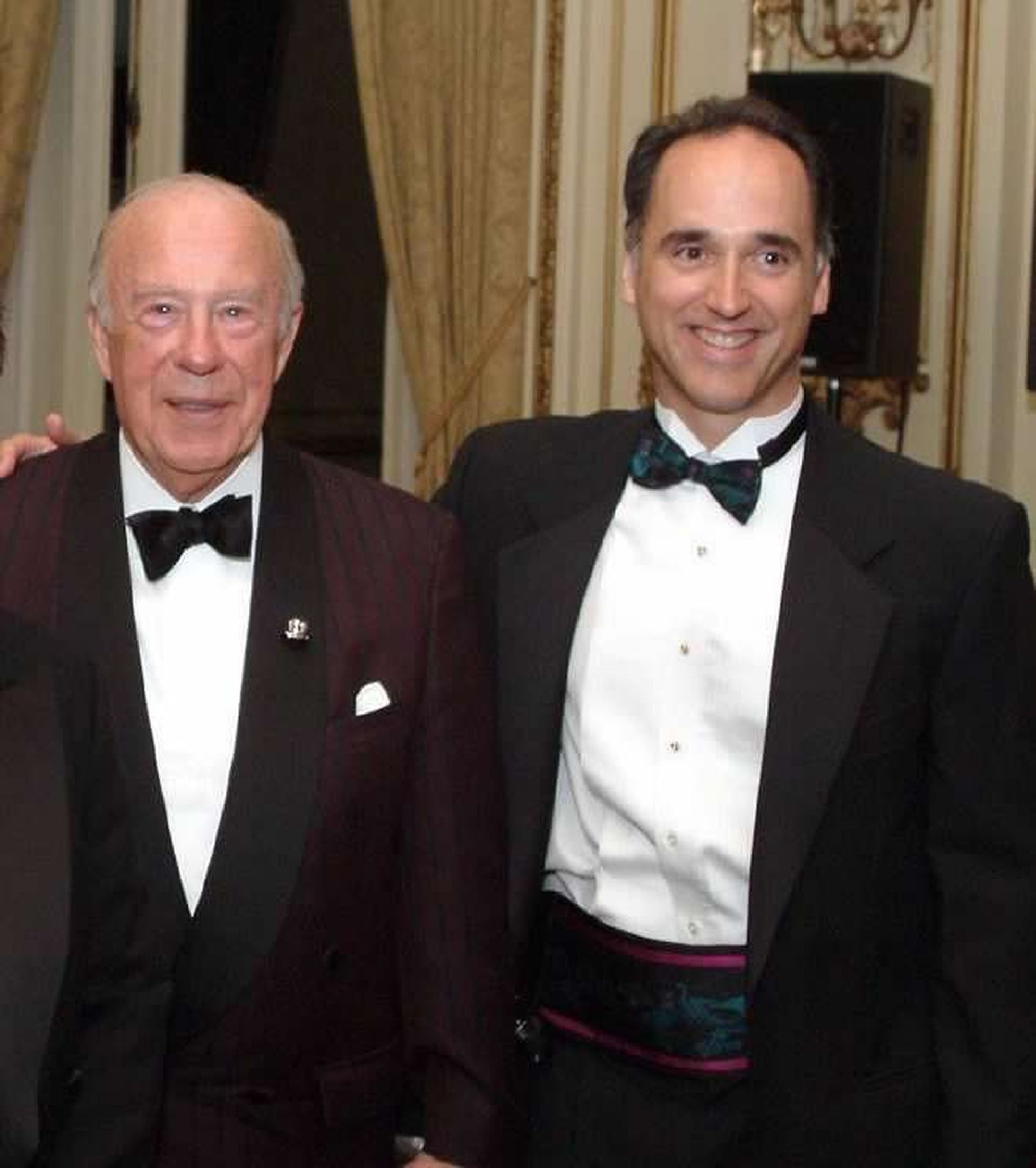
SAN JOSE, Calif. & SAN LUIS OBISPO, Calif. & SANTA CRUZ, Calif. & MONTEREY, Calif. - Washingtoner -- Peter Coe Verbica is the independently minded, fiscally conservative candidate for California's 19th Congressional District. Neither the party establishment nor the press has bothered to describe him accurately. He agrees with President Trump on the diagnosis of what ails the country, but holds the presidency itself to a sharper standard. This distinction provides headroom for moderate No Party Preference voters, centrist Democrats, and Republicans willing to exercise critical thinking — voters who care about fiscal responsibility, including reining in fraud and pork barrel politics. Verbica refuses to wear a T-shirt or a hat with a slogan. He's no chest-beater. Political independence requires more than calling yourself independent; it requires the backbone to tell your own side when you think it's wrong.
"I share the conviction that American power, innovation, production scalability, and independence matter," Verbica said. "Where I part ways is on method — on what it costs a republic when strength curdles into personal domination."
Verbica's platform tracks Trump's on the substance that matters most: rebuilding domestic semiconductor and defense manufacturing, treating Chinese Communist Party supply-chain dependence as a national-security liability rather than a commercial nuisance, and refusing to pretend commercial integration alone will tame an authoritarian regime. He backs targeted reshoring of critical industries over blanket tariffs, and credible force over transactional bluster.
The differences start with character. Verbica has criticized ad hominem politics, staff turmoil, and the substitution of loyalty for competence, arguing that personnel and policy problems are rarely as simple as "for me or against me." He has warned specifically against cult-of-personality politics, in which unwavering fealty is prized over the cold-eyed review that catches mistakes before they become expensive ones. He favors an older discipline: criticize in private, praise in public — correction that lands without humiliating the person receiving it, and credit that builds loyalty instead of demanding it.
"The Golden Rule has remarkably little to do with gold — and nothing at all to do with gilded furniture," Verbica said. On ethics, Verbica applies one standard to both parties. He has called out foreign investment funds, former politicians turned lobbyists, paid board seats, and foreign consulting arrangements as the same problem wearing different colors: non-U.S. capital and influence finding its way to a president's relatives. "You don't get to pick which family's conflicts of interest bother you," Verbica said. "The standard has to survive a change in party control, or it isn't a standard."
More on Washingtoner
Verbica is no defender of unchecked bureaucracy. At its worst, the administrative state can become a kind of soul-less algae, spreading for the sake of spreading and eventually choking the institutions it was created to serve. But the cure for unaccountable bureaucracy is not unaccountable executive power.
Verbica also draws a hard line on the concentration of executive power. He argues that any power a president claims to overcome resistance today will eventually sit in the hands of a president from the other party — and that the question to ask before expanding executive discretion isn't whether the current occupant deserves it, but whether one would want an ideological adversary to have it too. "That's not bureaucratic worship," Verbica said. "That's just remembering the office outlasts whoever holds it."
Verbica's case for Western civilization rests on more than slogans. He points to a Judeo-Christian, Greco-Roman, and Anglican-imperial inheritance — a confluence, he argues, that loses its magnificence the moment any one strand is removed or judged in isolation. He draws on John Locke and Marcus Aurelius as intellectual forebears of the founders, and on Friedrich Hayek's warnings against centralized planning, Richard Pipes's case for property as the foundation of liberty, and Thomas Sowell's insistence on data over ideology.
He is equally blunt about American education. Verbica believes meritocracy needs to improve on our own shores first, and that closing the STEM and literacy gap starts with the K-through-12 system, not with importing talent to paper over a homegrown shortfall. He has flagged a widening STEM gap against Chinese competitors and a literacy problem that goes beyond decoding words to actual comprehension — the ability to follow an argument into its assumptions. He favors mastery-based instruction, of the kind pioneered by Khan Academy, over pushing students forward before they have mastered the material, and argues that meritocracy in grading, admissions, and hiring is a competitiveness issue, not merely a cultural one.
More on Washingtoner
On fiscal policy, Verbica breaks sharply with Washington's bipartisan tolerance for deficit spending and monetary accommodation. He calls unchecked currency expansion "the cruelest tax of all" — invisible, regressive, and levied without a vote — and argues it inflates asset values for people who already own assets while pricing out recent graduates and immigrants starting from zero. He has called for the Federal Reserve to restructure its balance sheet to reduce exposure to rising rates, for a fuller accounting of foreign ownership of U.S. public and private assets as the real measure of the trade imbalance, and for procurement reform to end cost-plus defense contracting that rewards overruns instead of penalizing them. He has also pointed to Singapore's healthcare model — mandated savings accounts paired with price transparency — as one example worth studying to bring down federal healthcare costs.
"Exceptionalism isn't a status you get to claim," Verbica said. "It's earned, continuously, through performance and the willingness to admit when something isn't working and fix it. Populism is good at identifying grievances. It's statesmanship's job to turn a grievance into a policy that still works ten years later."
About Peter Coe Verbica
Peter Coe Verbica is a fifth-generation Californian, an Independently-Minded Republican, and Principal and Managing Director of Silicon Private Wealth®. He holds a J.D. from Santa Clara University School of Law, an M.S from MIT, and a B.A. from Santa Clara University, and is a CFP® (Certified Financial Planner®). A graduate of Bellarmine College Preparatory, Verbica has worked as a venture capital fund manager, CFO, and private equity investor, and has taught as an economics professor. He chairs the investment committee of a longstanding nonprofit, and serves as a co-inventor and trustee. On his mother's side, Verbica descends from the Coe family of ranchers whose donation formed the heart of Henry Coe State Park, California's second-largest state park. He is a candidate for California's 19th Congressional District.
For more information: peterverbica.com
Paid for by Verbica for Congress
"I share the conviction that American power, innovation, production scalability, and independence matter," Verbica said. "Where I part ways is on method — on what it costs a republic when strength curdles into personal domination."
Verbica's platform tracks Trump's on the substance that matters most: rebuilding domestic semiconductor and defense manufacturing, treating Chinese Communist Party supply-chain dependence as a national-security liability rather than a commercial nuisance, and refusing to pretend commercial integration alone will tame an authoritarian regime. He backs targeted reshoring of critical industries over blanket tariffs, and credible force over transactional bluster.
The differences start with character. Verbica has criticized ad hominem politics, staff turmoil, and the substitution of loyalty for competence, arguing that personnel and policy problems are rarely as simple as "for me or against me." He has warned specifically against cult-of-personality politics, in which unwavering fealty is prized over the cold-eyed review that catches mistakes before they become expensive ones. He favors an older discipline: criticize in private, praise in public — correction that lands without humiliating the person receiving it, and credit that builds loyalty instead of demanding it.
"The Golden Rule has remarkably little to do with gold — and nothing at all to do with gilded furniture," Verbica said. On ethics, Verbica applies one standard to both parties. He has called out foreign investment funds, former politicians turned lobbyists, paid board seats, and foreign consulting arrangements as the same problem wearing different colors: non-U.S. capital and influence finding its way to a president's relatives. "You don't get to pick which family's conflicts of interest bother you," Verbica said. "The standard has to survive a change in party control, or it isn't a standard."
More on Washingtoner
- Spokane: City and Permittable Partner to Support Rebuilding After Wildfires
- Geospatial Innovation Comes to Sacramento: FOSS4G NA 2026
- Tulsa Air & Space Museum Launches "Give $16 for the F-16" Challenge to Bring Thunderbird Home for Veterans Day
- Tacoma: In-Person Workshop on October 22 for Local Businesses on the City's Revolving Loan Fund Process
- Hannk And Zubie Join Forces To Shape The Next Generation Of Connected Vehicle Telematics
Verbica is no defender of unchecked bureaucracy. At its worst, the administrative state can become a kind of soul-less algae, spreading for the sake of spreading and eventually choking the institutions it was created to serve. But the cure for unaccountable bureaucracy is not unaccountable executive power.
Verbica also draws a hard line on the concentration of executive power. He argues that any power a president claims to overcome resistance today will eventually sit in the hands of a president from the other party — and that the question to ask before expanding executive discretion isn't whether the current occupant deserves it, but whether one would want an ideological adversary to have it too. "That's not bureaucratic worship," Verbica said. "That's just remembering the office outlasts whoever holds it."
Verbica's case for Western civilization rests on more than slogans. He points to a Judeo-Christian, Greco-Roman, and Anglican-imperial inheritance — a confluence, he argues, that loses its magnificence the moment any one strand is removed or judged in isolation. He draws on John Locke and Marcus Aurelius as intellectual forebears of the founders, and on Friedrich Hayek's warnings against centralized planning, Richard Pipes's case for property as the foundation of liberty, and Thomas Sowell's insistence on data over ideology.
He is equally blunt about American education. Verbica believes meritocracy needs to improve on our own shores first, and that closing the STEM and literacy gap starts with the K-through-12 system, not with importing talent to paper over a homegrown shortfall. He has flagged a widening STEM gap against Chinese competitors and a literacy problem that goes beyond decoding words to actual comprehension — the ability to follow an argument into its assumptions. He favors mastery-based instruction, of the kind pioneered by Khan Academy, over pushing students forward before they have mastered the material, and argues that meritocracy in grading, admissions, and hiring is a competitiveness issue, not merely a cultural one.
More on Washingtoner
- Coinfiliate Launches Platform to Helps Shoppers Earn Cashback and Creators Earn Referral Rewards
- CinderLabs Launches AIRA Governance MCP, Putting Live AI Compliance Posture Inside Claude
- Holiday Gambling Spending Expected to Rise 12% in December
- RAS AP Consulting Issues National Compliance Alert and Launches Q4 2026 AP Readiness Program Ahead of IRS FIRE → IRIS Cutover
- Spokane Police Respond to Fatal Stabbing in Northeast Spokane
On fiscal policy, Verbica breaks sharply with Washington's bipartisan tolerance for deficit spending and monetary accommodation. He calls unchecked currency expansion "the cruelest tax of all" — invisible, regressive, and levied without a vote — and argues it inflates asset values for people who already own assets while pricing out recent graduates and immigrants starting from zero. He has called for the Federal Reserve to restructure its balance sheet to reduce exposure to rising rates, for a fuller accounting of foreign ownership of U.S. public and private assets as the real measure of the trade imbalance, and for procurement reform to end cost-plus defense contracting that rewards overruns instead of penalizing them. He has also pointed to Singapore's healthcare model — mandated savings accounts paired with price transparency — as one example worth studying to bring down federal healthcare costs.
"Exceptionalism isn't a status you get to claim," Verbica said. "It's earned, continuously, through performance and the willingness to admit when something isn't working and fix it. Populism is good at identifying grievances. It's statesmanship's job to turn a grievance into a policy that still works ten years later."
About Peter Coe Verbica
Peter Coe Verbica is a fifth-generation Californian, an Independently-Minded Republican, and Principal and Managing Director of Silicon Private Wealth®. He holds a J.D. from Santa Clara University School of Law, an M.S from MIT, and a B.A. from Santa Clara University, and is a CFP® (Certified Financial Planner®). A graduate of Bellarmine College Preparatory, Verbica has worked as a venture capital fund manager, CFO, and private equity investor, and has taught as an economics professor. He chairs the investment committee of a longstanding nonprofit, and serves as a co-inventor and trustee. On his mother's side, Verbica descends from the Coe family of ranchers whose donation formed the heart of Henry Coe State Park, California's second-largest state park. He is a candidate for California's 19th Congressional District.
For more information: peterverbica.com
Paid for by Verbica for Congress
Source: Verbica for Congress
Filed Under: Government, Artificial Intelligence
0 Comments
Latest on Washingtoner
- Sky Quarry's Big Turning Point: CEO Marcus Laun Outlines the Next Phase for N A S D A Q: SKYQ
- Hunter Is Releasing New Music For The Holidays!
- Tixpool.com - Naija Premier Event Reseller
- Work 365 Expands Distributor Integrations with Companial for Microsoft Partners
- Guardian Data Opens 42,000-Square-Foot Moonachie Facility, Doubling New Jersey Capacity
- Spokane: Indigenous Peoples' Day Is Oct. 12
- SecureMaine 2026 is Here -- Thursday October 8th!
- Tacoma: Homicide Investigation – 800 Pacific Avenue
- HW Foundation Opens Nominations for Inaugural 50 Under 50 in AI; Deadline Oct. 16
- Pavillon 30 Years of Addiction Recovery in Western North Carolina, Earns National Accreditation
- Safer Spokane
- Spokane: Special Investigation Unit Seized Large Amounts of Cash and Cocaine
- Spokane: U.S. Conference of Mayors, American Beverage Foundation Visit Youth Wellness Zone
- Spokane: Disabled Smoke Alarm Contributes to Fatal Tiki Lodge Fire
- Spokane Police Investigate Fatal Fire With Fire Department
- Spokane: SPD and SFD Respond to Early Morning Fire in Downtown Apartments
- City To Simplify Services by Routing Non-Emergency Police, Fire Calls through Spokane 311
- ResC4EU Final Event at KOMPOZYT-EXPO 2026 – Building Resilient European Supply Chains
- Tacoma: Update Fourth Homicide Arrest – 2100 block of N 30th St
- City of Tacoma Invites Community Members to Share Their Experience Crossing I-5